TP-Link Deco 7 Pro BE14000 Tri-Band Wi-Fi 7 Mesh System — BE67 3-Pack
If you have a large home, a multi-gig internet connection, or simply want a wireless network that won’t become the bottleneck as your devices get faster, the TP-Link Deco 7 Pro BE14000 is an impressive whole-home Wi-Fi system.
The three-pack combines three identical Deco BE67 units into one seamless Wi-Fi 7 mesh network. TP-Link rates the system for coverage of up to 8,100 square feet, more than 200 connected devices, and up to 14Gbps of combined wireless capacity across its 2.4GHz, 5GHz, and 6GHz bands.
Those numbers are manufacturer-rated maximums rather than speeds an individual device will necessarily receive, but the hardware behind them makes the Deco 7 Pro particularly well suited to demanding home networks.
Why United Tech Pros Recommends It
One of the biggest advantages of the Deco 7 Pro is that TP-Link did not pair next-generation Wi-Fi with limited wired networking.
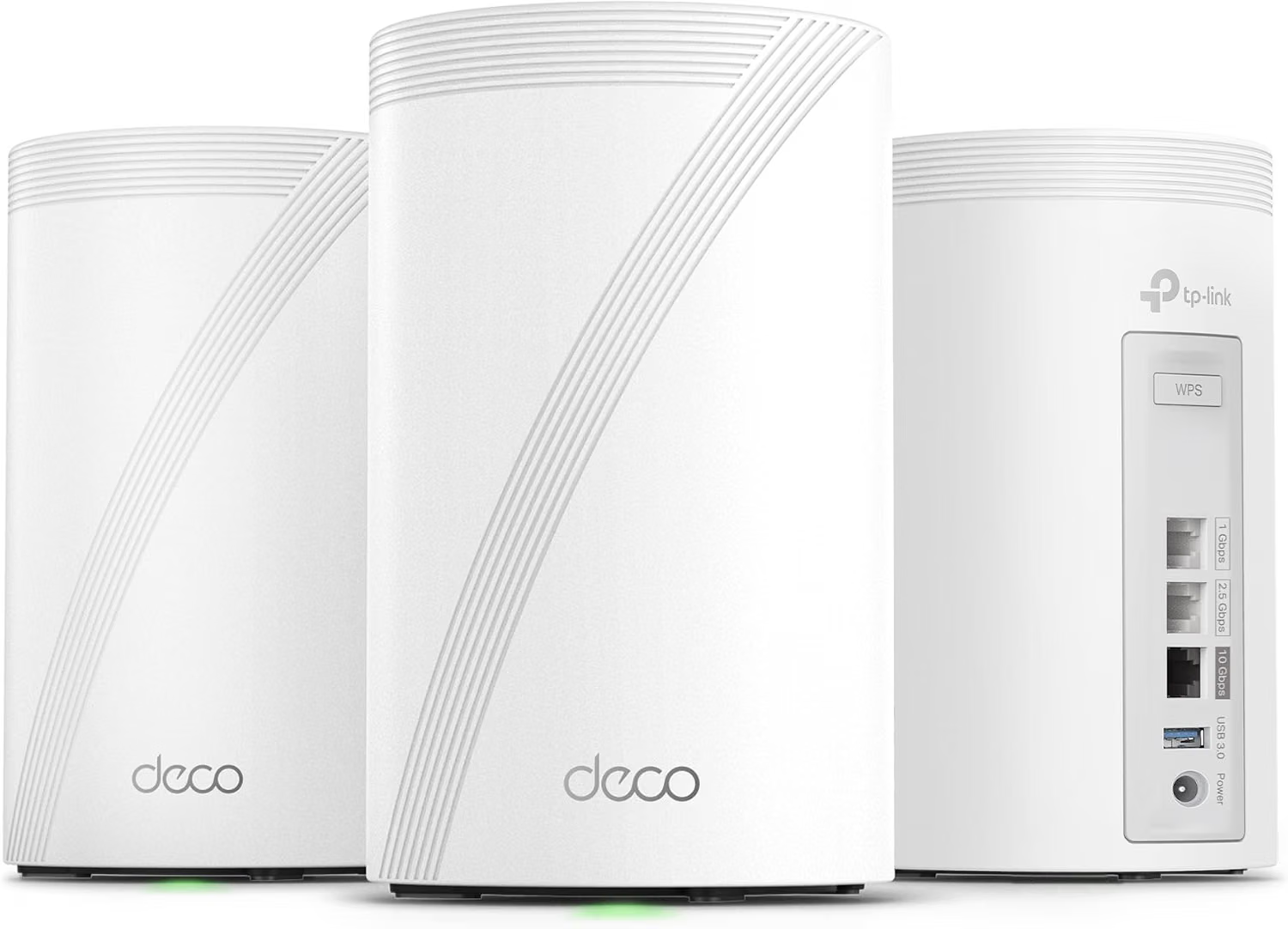
Each Deco BE67 includes a 10Gbps WAN/LAN port, a 2.5Gbps WAN/LAN port, a Gigabit WAN/LAN port, and USB 3.0. That means the system can take advantage of multi-gig fiber service and also provides considerably more flexibility for wired devices and Ethernet backhaul than many consumer mesh systems.
That matters because a great mesh network is about more than the speed between your phone and the nearest access point. The connection between mesh nodes can become a bottleneck as well. If Ethernet is available throughout the home, the Deco units support wired backhaul, allowing the nodes to communicate over the wired network instead of relying entirely on wireless connectivity.
For larger homes, home offices, media-heavy households, and customers moving to 2Gbps, 5Gbps, or faster internet service, that makes the BE67 a very capable foundation.
Tri-Band Wi-Fi 7
The Deco 7 Pro operates across all three modern Wi-Fi bands: 2.4GHz, 5GHz, and 6GHz.
TP-Link specifies maximum physical link rates of 8,647Mbps on 6GHz, 4,324Mbps on 5GHz, and 688Mbps on 2.4GHz. It also supports Wi-Fi 7 technologies including Multi-Link Operation (MLO), 320MHz channels, 4K-QAM, Multi-RUs, MU-MIMO, and OFDMA.
MLO is particularly interesting as more Wi-Fi 7 devices become common because compatible devices can make use of multiple wireless links rather than being restricted to the traditional single-band connection model.
You do not need Wi-Fi 7 devices to use the system. Older Wi-Fi equipment remains compatible, although newer devices are required to take advantage of many of Wi-Fi 7’s advanced features.
Designed for Large and Device-Heavy Homes
TP-Link rates the BE67 three-pack for up to 8,100 square feet of coverage and more than 200 devices. Actual coverage will depend heavily on construction materials, interference, device locations, floor plan, and where the Deco units are installed.
The system’s three-node architecture makes it particularly useful for multi-story homes and properties where a single router cannot provide reliable coverage everywhere.
Instead of creating separate networks or relying on traditional Wi-Fi extenders, the Deco units operate together as a mesh network. Compatible devices can move between nodes as you move through the house without requiring you to manually switch networks.
10-Gigabit Networking Makes a Big Difference
This is one of the features that separates the Deco BE67 from many less expensive mesh systems.
Every Deco BE67 provides:
1 × 10Gbps WAN/LAN
1 × 2.5Gbps WAN/LAN
1 × 1Gbps WAN/LAN
1 × USB 3.0
The Ethernet ports automatically support WAN or LAN operation, giving you flexibility when connecting the modem, switches, computers, NAS devices, entertainment systems, or wired backhaul.
For customers investing in multi-gig internet service, this is important. A mesh system with only Gigabit Ethernet would cap wired throughput long before a 2Gbps, 5Gbps, or 10Gbps connection reached its potential.
Security and Smart-Home Features
The Deco 7 Pro also includes TP-Link’s HomeShield platform, WPA3 support, guest networking, VPN server and client capabilities, access controls, and a dedicated IoT network with device isolation. HomeShield offers a free basic tier, while some advanced features require a paid plan.
The separate IoT network is something we particularly like for increasingly connected homes. Smart plugs, cameras, appliances, televisions, speakers, thermostats, and other IoT equipment can be separated from the primary network rather than having every device living on the same Wi-Fi network.
Management and initial setup are handled through TP-Link’s Deco app, and the BE67 can operate in either router or access point mode.
Who Is the Deco 7 Pro BE14000 Best For?
We would look at the Deco 7 Pro for large or multi-story homes, high-device households, serious home offices, multi-gig fiber customers, wired homes, and customers who want a network they can keep for several years.
It also makes sense for homes doing a lot simultaneously: multiple 4K streams, cloud backups, video conferencing, gaming, security cameras, smart-home equipment, and large local file transfers.
For a smaller home with a 500Mbps or 1Gbps internet connection and relatively modest networking needs, this system may be more hardware than necessary. A less expensive Deco model can often provide excellent results in that situation.
United Tech Pros Recommendation
The TP-Link Deco 7 Pro BE14000 BE67 is one of the more interesting Wi-Fi 7 mesh systems for customers who want performance beyond ordinary consumer networking.
Its combination of tri-band Wi-Fi 7, 6GHz connectivity, three-node mesh coverage, 10Gbps Ethernet, 2.5Gbps Ethernet, optional wired backhaul, and support for more than 200 devices makes it especially well suited to large homes and multi-gig internet connections.
The important part is still installation. Even excellent mesh hardware can perform poorly when nodes are placed incorrectly. Home layout, building materials, interference, modem location, Ethernet availability, and distance between nodes should all be considered when planning the network.
Best For: Large homes, multi-story properties, multi-gig fiber, home offices, high-device households, advanced smart homes, streaming and gaming.
UTP Recommended: A strong choice for customers who want high-end whole-home Wi-Fi without moving to a traditional prosumer or enterprise access-point system.